Most connectivity advice is about convenience. On a mountain it is about knowing where everyone is, which is a different problem with different answers.
A ski week is the one European trip where being unreachable stops being an inconvenience and starts being a genuine complication. Groups split up constantly — different abilities, different runs, someone stopping for lunch earlier than everyone else — and the arrangements that hold a day together are all made by phone.
So the useful version of this article is not about how much data a ski week uses. It is about the specific things that go wrong on a mountain, and what actually works.
The four things that actually go wrong
One: the valley floor and the ridgeline are different worlds
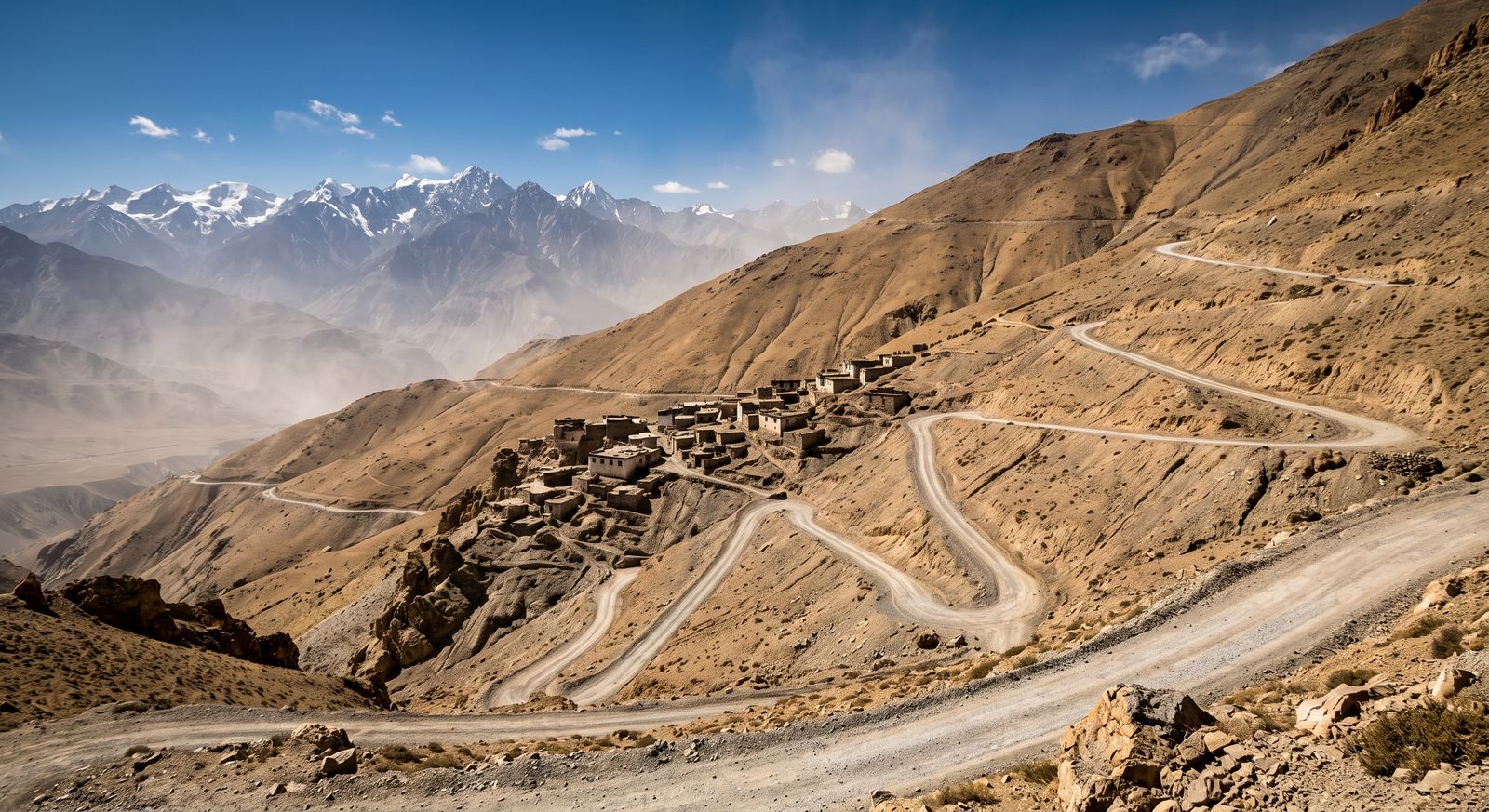
Coverage in Alpine resorts follows the terrain rather than the map. High open pistes and ridgelines often have good signal, because there is a clear line to a mast somewhere across the valley. Wooded runs, north-facing bowls and the bottom of steep valleys frequently have none.
The practical consequence is counter-intuitive: you are often more contactable at the top of the mountain than at the bottom. People assume the opposite and wait at the valley station for a message that cannot arrive.
Two: the cold kills batteries
A phone at minus ten in an outside pocket loses charge dramatically faster than the same phone at room temperature, and can shut down entirely while showing forty per cent remaining. This is the single most common reason someone becomes uncontactable on a ski day, and it has nothing to do with signal.
Carry the phone in an inside pocket against a base layer, not in a jacket outer or a trouser pocket. It makes a substantial difference and costs nothing.
Three: the group has no agreed fallback
Almost every lost-person situation on a mountain resolves the same way: someone eventually goes to the place they had all agreed to meet. The failure is not having agreed on one.
Four: gloves
You cannot type. Voice notes and one-tap location sharing work; composing a message does not.
WHAT TO SET UP THE NIGHT BEFORE
Agree a physical fallback point and a fallback time. A named restaurant and "if we lose each other, there at one". This solves more problems than any technology.
Turn on live location sharing within the group for the week, in whichever messaging app you all use. It updates when there is signal and shows the last known position when there is not, which is exactly what you need.
Download the resort piste map in the resort’s own app, and the offline area map in your maps app. Both work without signal.
Charge to full, and put the phone in an inside pocket.
What a ski week actually uses
Less than a city break, comfortably. You are outside all day with gloves on, and the evenings are usually spent somewhere with Wi-Fi.
Rough reference for seven nights, assuming photo backup runs on Wi-Fi: 2 to 4GB for most people. Add more if you are uploading video from a helmet camera, which is the one activity that changes the picture completely — a week of that can exceed everything else several times over.
Off-piste, ski touring and the safety point
If you are going beyond the marked runs, treat the phone as one part of a system and not the system. Signal is unreliable off-piste by definition, and a phone is not a substitute for a transceiver, a shovel, a probe, and going with someone who knows the terrain.
That is not a connectivity opinion, it is the standard mountain-safety position, and it is worth stating plainly in an article about staying in touch.
Getting there
The transfer from Geneva is the other thing worth knowing. A large proportion of UK skiers fly into Geneva and drive into France, which means crossing a border twice in a day. Near Geneva your phone can hold a Swiss network well into France, and Swiss roaming is frequently charged differently from French roaming.
If you are on your home network, it is worth checking how both countries are treated before the transfer rather than after it.
The honest summary
A ski week needs very little data and a small amount of preparation. The preparation is worth more than the plan: a fallback meeting point, location sharing turned on, a downloaded piste map, and the phone kept warm.
Do those four things and the mountain stops being a connectivity problem.